Wondering how the regions of Baden-Wuerttemberg fit together? You meet four Regierungsbezirke, 12 regional planning bodies, 35 Landkreise and 9 Stadtkreise, and each has its own role.
This page is part of the baden-wuerttemberg guide, which gives the wider overview of the state.
| Item | Value |
|---|---|
| Regierungsbezirke (administrative districts) | 4 (Stuttgart, Karlsruhe, Freiburg, Tübingen) |
| Regionalverbände (regional associations) | 12 |
| Landkreise (rural districts) | 35 |
| Stadtkreise (city districts) | 9 |
| Gemeinden (municipalities) | 1,101 |
These figures come from the state’s own administration page, Von der Gemeinde bis zum Ministerium. Figures can change, so check the source before you rely on them.
The four Regierungsbezirke
The largest administrative regions are the four Regierungsbezirke: Stuttgart, Karlsruhe, Freiburg and Tübingen. Each one is run by a Regierungspräsidium, which acts as the middle authority between the ministries and the districts below.
At the head of each Regierungsbezirk stands a Regierungspräsidentin or Regierungspräsident, appointed by the Ministerpräsident to represent the state government at that level. The Regierungspräsidien also hear objections against decisions of the Landratsämter and carry out technical and legal supervision.
Some tasks are handled by one Regierungspräsidium for the whole state. For example, the Regierungspräsidium Tübingen covers consumer protection and market surveillance across Baden-Württemberg.
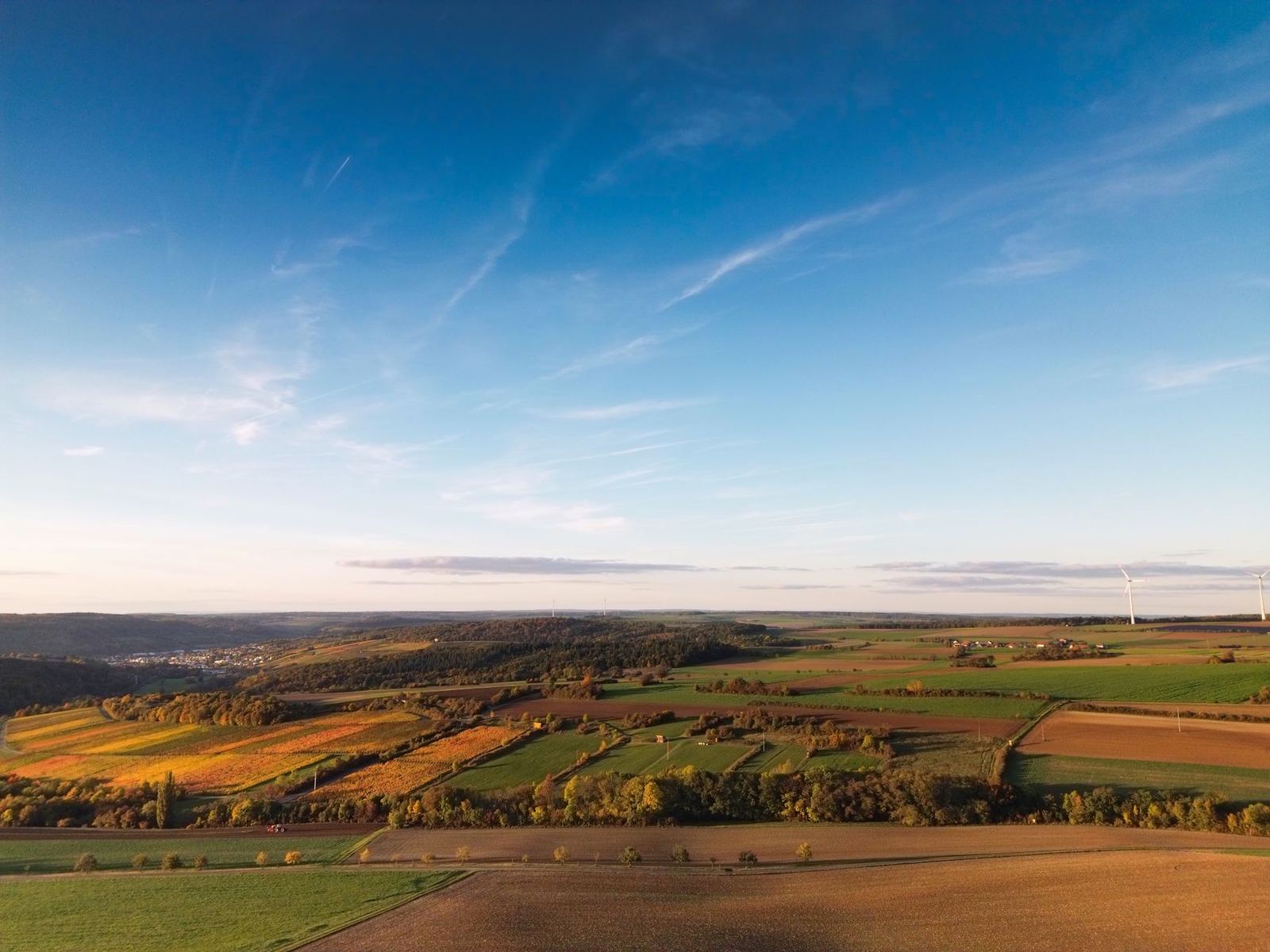
The Regierungsbezirk Stuttgart gives a sense of scale. According to the Regierungspräsidium Stuttgart facts sheet, it covers 10,556.86 km² and has 4,205,849 inhabitants, stretching from Geislingen to Wertheim.
Landkreise and Stadtkreise: the district level
Below the Regierungsbezirke, the land is divided into 35 Landkreise, a number that dates from the district reform of the 1970s. Each Landkreis covers several municipalities and takes on work that falls between them or that a single municipality is too small to handle, such as waste collection or vocational schools.
The Landratsamt has a double nature. It is the lower state administrative authority and, at the same time, the authority of the Landkreis as a self-governing body. For how that reform fits into the longer story, see the history of baden-wuerttemberg.
Voters choose a new Kreistag every five years. The Kreistag elects the Landrat for eight years, and the Landrat chairs the Kreistag without a vote.
The nine Stadtkreise
Nine cities do not belong to any Landkreis. Their city administration therefore also carries out the tasks of the lower administrative authority, which in a Landkreis is the Landratsamt:
- Baden-Baden
- Freiburg im Breisgau
- Heidelberg
- Heilbronn
- Karlsruhe
- Mannheim
- Pforzheim
- Stuttgart
- Ulm
The state describes this as a Baden-Württemberg specialty. Other German states speak of kreisfreie Städte rather than Stadtkreise.
What are the 12 Regionalverbände?
When people in Baden-Württemberg talk about Regionen in an administrative sense, they usually mean the 12 Regionalverbände. These are public-law bodies, not authorities, and each covers the area of several Stadt- or Landkreise.
The state’s overview lists these regional associations:
- Regionalverband Bodensee-Oberschwaben
- Regionalverband Donau-Iller
- Regionalverband Heilbronn-Franken
- Regionalverband Hochrhein-Bodensee
- Regionalverband Mittlerer Oberrhein
- Regionalverband Neckar-Alb
- Regionalverband Nordschwarzwald
- Regionalverband Ostwürttemberg
- Metropolregion Rhein-Neckar
- Regionalverband Schwarzwald-Baar-Heuberg
- Regionalverband Südlicher Oberrhein
- Verband Region Stuttgart
Each association has a democratically legitimised assembly, a chair and an administration. Their central task is regional planning under the state planning act, which crosses municipal and district borders. Typical topics are settlement and transport development, economic promotion, supply and disposal, environmental protection and culture.
The Regierungspräsidium Freiburg page on Regionalverbände shows how the levels meet. The Regierungspräsidien take part in drawing up and updating the regional plans, and they exercise legal supervision over the associations.
Gemeinden: where daily life happens
The base of the system is the Gemeinde. Baden-Württemberg has 1,101 of them, of which 95 are Große Kreisstädte and 316 carry the title Stadt.
The state guarantees municipalities the right of local self-government. Their compulsory tasks include:
- urban land-use planning (Bauleitplanung)
- providing kindergarten places
- running schools as the responsible body
- setting up a fire brigade
- providing cemeteries
- lighting, cleaning and winter clearing of local streets
Municipalities also take on voluntary tasks, such as libraries, a community hall, a museum, a theatre, adult education, a swimming pool, green spaces and grants to local clubs. The state’s page names these as examples rather than a fixed list.
Regions of Baden-Württemberg: how the levels fit together
Ministries stand at the top of the state administration. Below them, the levels work like this:
- Ministries head the state administration.
- Regierungspräsidien bring together state functions in the four Regierungsbezirke and act as the middle authority.
- Landratsämter and the city administrations of the Stadtkreise act as lower administrative authorities.
- Gemeinden handle local matters on their own responsibility.
The Regionalverbände sit beside this chain rather than inside it, because they are planning associations and not authorities. For how the state parliament works, read about the baden-wuerttemberg landtag.
A practical way to read the map is to ask which level answers your question. The state’s own descriptions point to these examples:
- A kindergarten place, a local fire brigade or street lighting: your Gemeinde.
- Waste collection or a vocational school that serves several municipalities: the Landkreis.
- Living in one of the nine Stadtkreise: the city administration, which also does the Landratsamt’s work.
- An objection against a decision of a Landratsamt: the Regierungspräsidium.
- Planning for settlement or transport across municipal and district borders: the Regionalverband.
- Consumer protection and market surveillance for the whole state: the Regierungspräsidium Tübingen, which takes this on for all the others.
Not every task follows the neat ladder. Where a task is given to a special authority, it stays outside the Regierungspräsidien, as with the Statistisches Landesamt, which is responsible for the whole of Baden-Württemberg.
The word “region” is where most confusion starts. In everyday speech it can mean a landscape or a larger area, while in the state’s administrative language the Regierungsbezirke are the four big districts and the Regionalverbände are the 12 planning regions. When you read a report, a map or a news item, check which of the two is meant before comparing any numbers.
The levels also overlap in people’s daily lives. A resident of a smaller town belongs to a Gemeinde, a Landkreis, a Regierungsbezirk and a Regionalverband at the same time, and each of those four does a different job for the same address. Residents of the nine Stadtkreise skip the Landkreis step, because the city itself fills that role.
Democratic control looks different at each level. Voters choose a new Kreistag every five years, the Kreistag elects the Landrat for eight years, and each Regionalverband has a democratically legitimised assembly, a chair and an administration of its own. The Regierungspräsidien, by contrast, are led by a person appointed by the Ministerpräsident.
Frequently asked questions
How many regions does Baden-Württemberg have?
Show answer
It depends on the meaning. The state has 4 Regierungsbezirke and 12 Regionalverbände, as listed on its own administration page.
What is the difference between a Landkreis and a Stadtkreis?
Show answer
A Landkreis contains several municipalities and is run through a Landratsamt. A Stadtkreis is a city that belongs to no Landkreis, so its city administration also does the Landratsamt’s work.
Which cities are Stadtkreise?
Show answer
They are Baden-Baden, Freiburg im Breisgau, Heidelberg, Heilbronn, Karlsruhe, Mannheim, Pforzheim, Stuttgart and Ulm.
Who leads a Landkreis?
Show answer
The Landrat leads the district administration and chairs the Kreistag without a vote. The Kreistag elects the Landrat for eight years.
Are the Regionalverbände government authorities?
Show answer
No. The state describes them as public-law bodies and not authorities, with regional planning as their central task.