Wondering what the baden-wuerttemberg landtag actually does? It is the state parliament in Stuttgart, where 157 elected members make laws, elect the minister-president and keep watch over the government.
This page is part of the baden-wuerttemberg guide, which gives the wider picture of the state.
| Item | Value |
|---|---|
| Members in the 18th legislative period | 157 members |
| Haus des Landtags inaugurated | 1961 |
| Term of the Landtag | 5 years (since 1995) |
| State constitution in force | 19 November 1953 |
| Majority needed to amend the constitution | Two-thirds of the Landtag |
| Constitutional amendments so far | 23 (most recent in 2015) |
The figures come from the Landtag’s 2026 welcome brochure and the state government’s constitution page. Figures can change, so check the source before you rely on them.
Where does the Landtag sit, and who is in it?
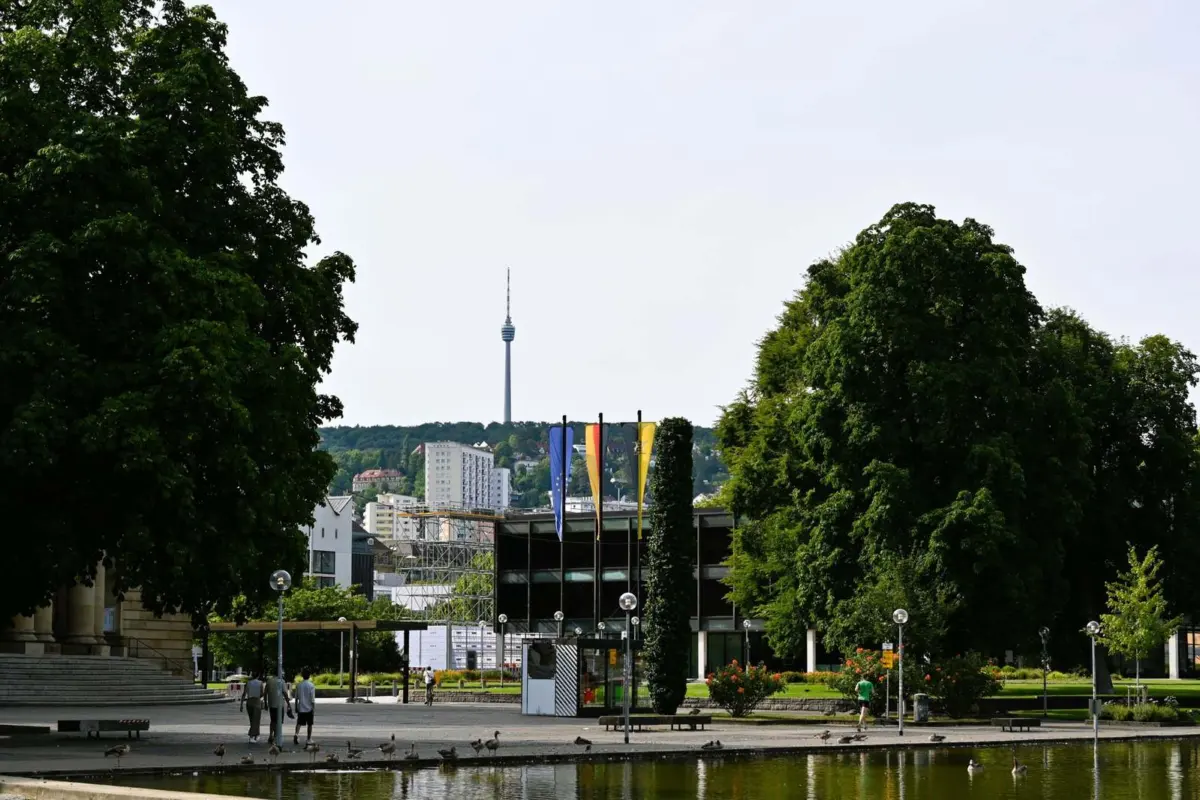
The Landtag is the state parliament of Baden-Württemberg, and its seat is Stuttgart. The Landtag’s welcome brochure calls Stuttgart the political centre of the state and the seat of both parliament and government.
The Haus des Landtags was inaugurated in 1961. The brochure describes it as the first genuine new parliament building of the 20th century on the European continent, with the plenary chamber at the centre of a cube-shaped structure.
As of the Landtag’s 2026 brochure (editorial deadline July 2026), the 18th legislative period has 157 members. The foreword describes them as freely elected representatives whose decisions influence many areas of life.
The state they represent is the third largest of Germany’s 16 federal states, both by area (35,751 km²) and by population (a little over 11 million people). It came into being on 25 April 1952 from the former states of Baden, Württemberg-Baden and Württemberg-Hohenzollern, according to the same brochure.
To see how the state differs from one area to the next, read about the regions of baden-wuerttemberg.
What rules frame the Landtag?
The state constitution describes Baden-Württemberg as a republican, democratic and social state under the rule of law in Article 23(1). Article 25(1) adds that state authority comes from the people, according to the state government’s constitution page.
The Basic Law sets only a few principles for state constitutions in its Article 28. One of them is that the people in states, districts and municipalities must have a representation chosen in general, direct, free, equal and secret elections, as the same page explains.
The state constitution was adopted on 11 November 1953 by 102 votes to five, with seven abstentions. It came into force on 19 November 1953.
Beyond the Basic Law’s baseline, the constitution contains direct participation rights. These include dissolving parliament by referendum (Article 43(2)) and special forms of popular legislation (Articles 59 and 60).
The Landtag itself can change the constitution, and the page lists some milestones. As of that page, the constitution has been changed 23 times, most recently in 2015:
- Changing the constitution needs a two-thirds majority in the Landtag.
- 1974: the possibility of a Volksbegehren (a popular petition for legislation) was introduced.
- 1995: the Landtag’s term went from four to five years.
- 2015: the most recent change greatly widened citizens’ participation options.
The three core jobs: laws, elections and oversight
The Landtag’s welcome brochure groups legislation, election and oversight into one chapter. It is followed by separate chapters on the budget right, the petition right and the electoral system.
Legislation follows a set path. A motion of 9 October 2019 to change the Landtag’s rules of procedure (Drucksache 16/7029) lists a first, second and third reading, with referral to a committee in between. The same text also lists a simplified procedure for supplementary budget laws.
Elections mean above all choosing the minister-president, covered in the next section.
The same rules of procedure list several tools for oversight of the government:
- Question time (Fragestunde), government questioning (Regierungsbefragung) and the topical debate (Aktuelle Debatte).
- Minor and major interpellations (Kleine and Große Anfragen), written questions to the government.
- Committees of inquiry (Untersuchungsausschüsse) and study commissions (Enquetekommissionen).
- A parliamentary control body (Parlamentarisches Kontrollgremium).
That text dates from the 16th legislative period, so later versions of the rules may differ. Check the Landtag’s own publications for the current wording.
How does the Landtag elect and check the government?
The state government’s page on the minister-president’s role describes the steps:
- The Landtag elects the minister-president by a majority of its members in a secret ballot. The candidate must be at least 35 and eligible to be a member of the Landtag.
- The minister-president then names the government: ministers, state secretaries and Staatsräte, plus a deputy.
- The government needs the Landtag’s confirmation, with more than half of the votes cast, before it starts work.
Removal works differently. The Landtag can withdraw its confidence in a minister-president only through a constructive vote of no confidence: it must elect a successor by a majority of its members at the same time.
According to Article 49 of the constitution, the minister-president sets the guidelines of policy and bears responsibility for them. The Villa Reitzenstein in Stuttgart is the minister-president’s official seat and also the seat of the government, per the same page.
The size of the government has a constitutional limit. In a statement of 15 June 2021 (Drucksache 17/102), the state ministry noted that Article 45(2) allows state secretaries and honorary Staatsräte as further members. The number of state secretaries may not exceed one third of the number of ministers.
Budget, petitions and voters’ rights
The brochure gives the budget right (Etatrecht) its own chapter, and the rules of procedure mention a simplified procedure for supplementary budget laws. For the economic background to the state’s finances, see the baden-wuerttemberg economy overview.
The same rules provide for a petitions committee under Article 35a of the constitution, as set out in Drucksache 16/7029. They also contain procedures for a Volksbegehren and a Volksantrag, two forms of popular initiative.
This page only describes how these procedures are set out. It takes no side on any petition, referendum or party.
How the Landtag organises its work
A new Landtag is convened under Article 30(3) of the constitution. According to Drucksache 16/7029, its first sitting takes place no later than the 16th day after the start of the legislative period. It is opened by the Alterspräsident, the member who has served longest in the Landtag.
The brochure’s chapter list shows the main building blocks of the parliament:
- The president and the Präsidium. In the 2019 motion, the Präsidium has 21 members, spread across all parliamentary groups in proportion to their size.
- The parliamentary groups (Fraktionen).
- The committees (Ausschüsse), including a standing committee under Article 36 and an emergency committee under Article 62, described as the “Notparlament”.
- The relationship with the government, and the Landtag’s own administration.
The foreword mentions ways to get closer to the parliament: a guided tour by the visitor service, exchange with members, and information offers online and offline.
Frequently asked questions
How many members does the Landtag have?
Show answer
As of the Landtag’s 2026 brochure, the 18th legislative period has 157 members.
How long is a legislative term?
Show answer
Five years. The constitution page says the term changed from four to five years in 1995.
Who elects the minister-president?
Show answer
The Landtag does, by a majority of its members in a secret ballot, according to the state government’s page on the minister-president.
Can the state constitution be changed?
Show answer
Yes, by the Landtag with a two-thirds majority. As of the state government’s constitution page, it has been changed 23 times, most recently in 2015.
Is this page run by the Landtag?
Show answer
No. This is an independent editorial page with no link to the Landtag or any official body. For official information, use the Landtag’s own publications.